
Guides
Turf vs. Indoor Soccer Shoes: Which Pair Do You Need?
Nov
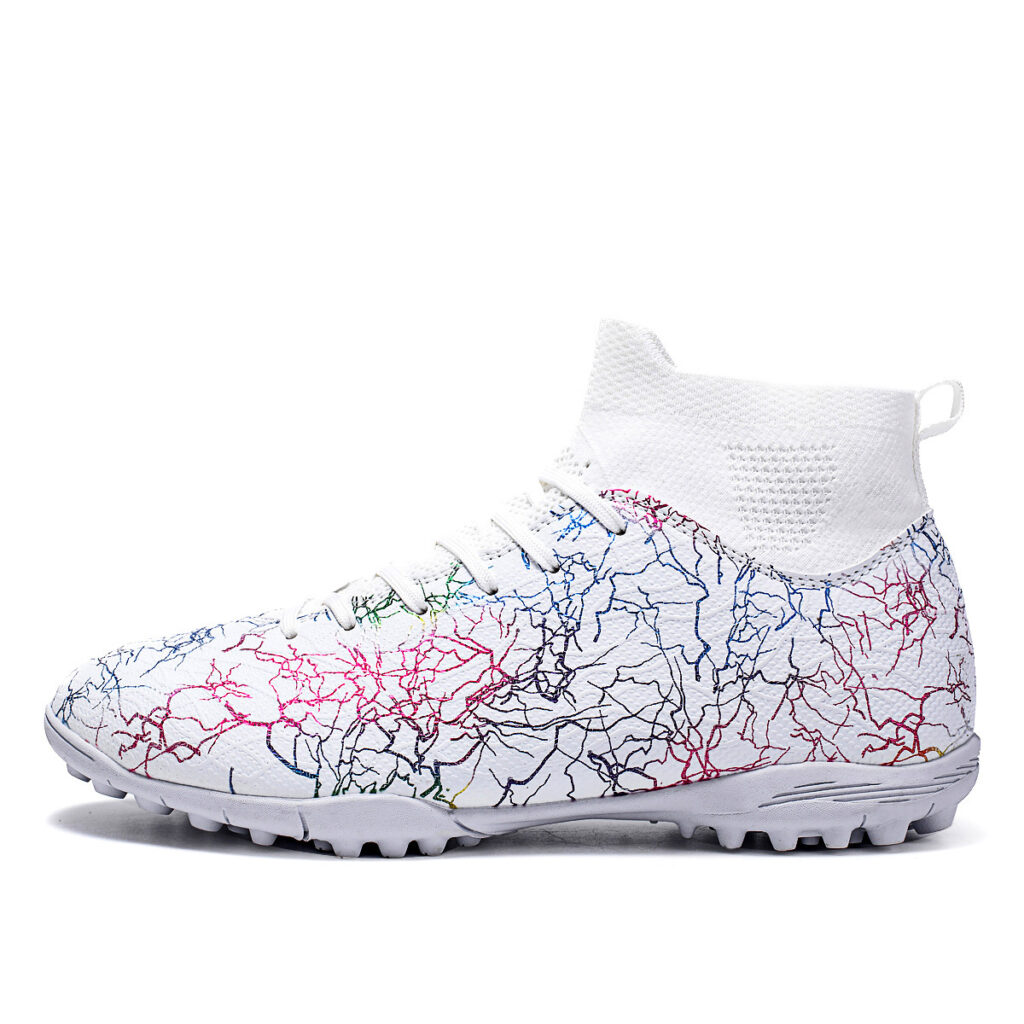
Pictured: Prism White Crack High-Top Turf Soccer Shoes
If you play on artificial grass one night and on a gym floor the next, you have probably wondered whether one pair of shoes can do both. The short answer: the outsole decides. Here is how turf shoes and indoor soccer shoes differ, and how to choose.
Turf shoes: built for artificial grass
Turf soccer shoes have a rubber outsole covered in many small lugs. Those short studs grip the fibers of artificial grass without sinking in like the longer studs on outdoor cleats. They give you traction for quick cuts while keeping pressure spread across your foot.
Best for: artificial turf fields, small-sided games on turf, and training on synthetic surfaces.
Indoor shoes: built for courts
Indoor soccer and futsal shoes use a flat, gum-style rubber outsole. A flat sole keeps maximum contact with smooth floors, which helps you stop, turn, and pivot with control.
Best for: futsal, indoor courts, gym floors, and other smooth hard surfaces.
Can you swap them?
It is best to match the shoe to the surface. Small turf lugs can feel unstable and slippery on a polished gym floor, and a flat indoor sole has less grip on artificial grass. If you play on both regularly, a pair of each is the most comfortable option.
High-top or low-top?
- High-top knit collar: a stretchy sock-like collar wraps the ankle for a snug, secure feel.
- Low-top: a lower cut leaves the ankle free and feels lighter for fast footwork.
Neither is “better”. It comes down to how you like a shoe to feel.
Getting the size right
Measure your foot length from heel to longest toe and compare it with the Sneakers table in our Size Guide. Our sneakers use US Men sizing, and the guide lists US Women equivalents. If you are between sizes, choose the larger size.
Ready to pick a pair? Browse our turf and indoor soccer shoes.
